

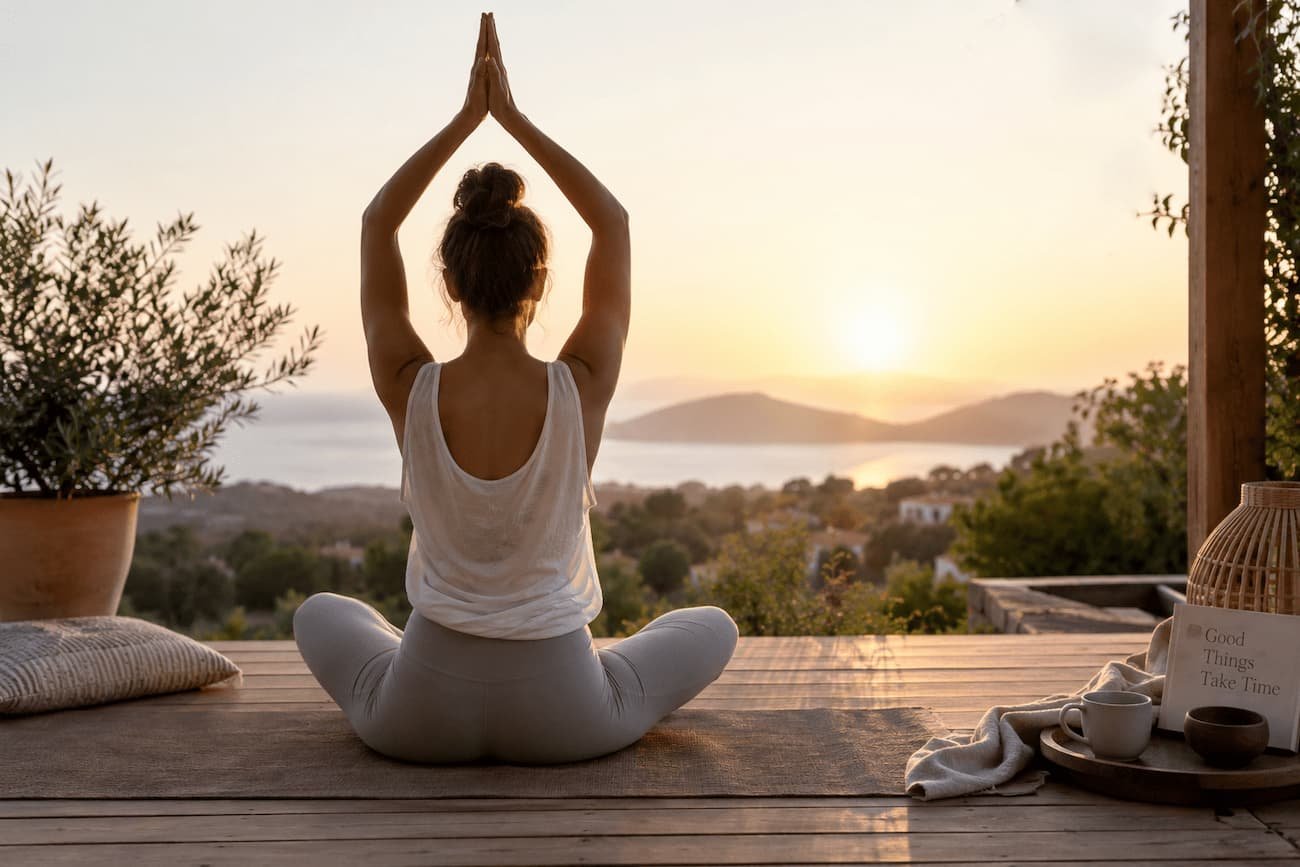
We live in a world where everything seems to happen faster and faster. Messages, work, commitments, social media and constant notifications can make us feel as though we are always rushing from one thing to the next. In this context, slow living and yoga offer a different way of understanding everyday life: one based on presence, balance and conscious choices rather than speed and constant productivity.
Living more slowly does not mean doing everything at a snail’s pace or abandoning responsibilities. It means learning to give each moment the attention it deserves, identifying what is truly important and creating space to enjoy the small things that often go unnoticed.
What does slow living really mean?
Slow living is a lifestyle philosophy that encourages us to reduce unnecessary rush and reconnect with what gives meaning to our daily lives. It invites us to question the idea that being busy all the time is synonymous with being productive or successful.
Instead, this approach focuses on quality over quantity, encouraging us to enjoy experiences more consciously. Eating without distractions, going for a walk without constantly checking our phone or simply allowing ourselves a few quiet minutes can become small but meaningful ways to incorporate slow living into everyday life.
It is also about creating routines that respect our own rhythm. Sometimes, slowing down means learning to say no, simplifying our schedule or setting aside time for activities that help us feel more connected to ourselves.
Slow living and yoga: two philosophies that complement each other
The relationship between slow living and yoga is very natural. Yoga teaches us to pay attention to the body, the breath and the present moment, while slow living encourages us to bring that same awareness into the rest of our daily activities.
During yoga practice, there is no need to rush towards the next posture. The focus is on observing sensations, breathing consciously and respecting our own limits. This mindset can gradually extend beyond the mat and influence how we approach work, relationships and everyday decisions.
In this sense, yoga can become much more than physical exercise. It can be a tool that reminds us that not everything needs to happen immediately and that sometimes the greatest benefits appear when we allow ourselves to slow down.
Learning to listen to your body
One of the fundamental principles of yoga is body awareness. Instead of forcing movements or competing with others, the practice encourages us to recognise how we feel at each moment.
This ability to listen to the body fits perfectly with a slow lifestyle. Fatigue, tension or lack of concentration are often signs that we need to reduce our pace, rest or reorganise our priorities.
Taking these signals seriously can help us create healthier routines. Something as simple as stretching in the morning, practising a few minutes of conscious breathing or taking a short break during the working day can make a noticeable difference in how we feel.
Creating moments of calm in everyday life
You do not need to completely change your lifestyle to embrace slow living. Small changes can gradually transform the way you experience your daily routine.
For example, you can begin the day without immediately looking at your phone, enjoy breakfast calmly or spend a few minutes practising gentle yoga, meditation or conscious breathing. These small rituals help create a sense of calm before the demands of the day begin.
At night, slowing down can also improve the transition between activity and rest. Soft lighting, stretching, reading or reducing screen time can help create a more peaceful environment and encourage mental and physical relaxation.
Slow living and yoga as a way to reconnect with the present
One of the biggest challenges of modern life is that our attention is constantly divided. We may be doing one thing while thinking about three others, which makes it difficult to fully enjoy what is happening.
Slow living and yoga invite us to return to the present moment. Through movement, breathing and mindful observation, yoga helps train our attention, while slow living encourages us to apply this awareness to everyday experiences.
Cooking, walking, talking to someone or simply resting can become opportunities to practise presence. The goal is not to eliminate every distraction, but to develop a greater ability to recognise when our mind is elsewhere and gently bring our attention back.
The importance of creating space for yourself
Living more slowly also means understanding that rest is not wasted time. Moments of pause allow us to recover energy, organise our thoughts and reconnect with what we really need.
Creating personal space can involve practising yoga, spending time outdoors, writing, reading or simply doing nothing for a while. These moments can help reduce the sensation of constantly being in “doing mode” and encourage a healthier relationship with productivity.
Over time, learning to protect these spaces can help us develop routines that feel more sustainable and aligned with our own priorities.
A slower rhythm for a more balanced life
Adopting a slower way of living is not about escaping modern life, but about learning to navigate it with greater awareness. Yoga can be an excellent companion in this process because it encourages patience, self-observation and conscious breathing.
Integrating slow living and yoga into daily life can help us appreciate simple moments, reduce unnecessary pressure and reconnect with our own rhythm.
If you feel that slowing down, reconnecting with yourself and bringing more awareness into your daily life is something you need, Inner Truth Academy offers personal growth experiences and retreats that combine yoga, mindfulness, meditation and other practices designed to support greater balance and self-awareness. Their programs in Tenerife create a space to step away from everyday routines, reconnect with your inner rhythm and explore a more conscious way of living.